 0
0
 0
0
www.silkfaw.com – AI is no longer confined to racks of servers on Earth. With a fresh $10 million seed round, Sophia Space is pushing ai computing into orbit, where data centers can escape gravity, cooling limits, and crowded terrestrial networks. This bold move hints at a future where the most advanced ai models might run hundreds of kilometers above our heads rather than in distant cloud regions.
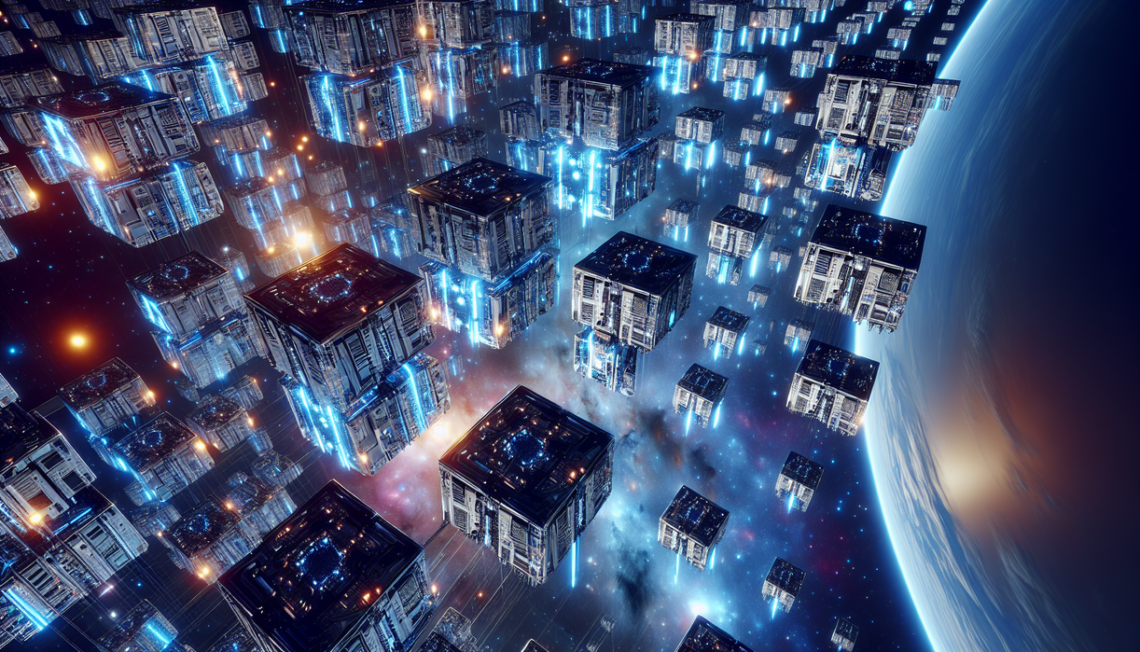
Central to Sophia Space’s plan is a modular ai computer tile designed for the harsh environment of space. Instead of massive, monolithic satellites, the startup envisions swarms of smaller, reconfigurable machines. This approach could redefine how we deploy, scale, and upgrade ai infrastructure, delivering processing power when and where it is needed across the planet.
Why Put AI Computers in Space?
At first glance, placing ai computers in orbit may seem extravagant. Traditional ground-based data centers already consume enormous capital, so why add rockets to the mix? The answer lies in physics, geography, and strategy. Space offers extreme cold, abundant solar energy, and an unobstructed line of sight to huge portions of Earth, all of which can benefit next-generation ai services.
Cooling is one of the biggest cost drivers for terrestrial ai data centers. High-performance chips produce heat quickly. Space flips that script. Vacuum and deep cold allow more efficient thermal designs, provided engineers manage radiation and temperature swings. If Sophia Space can harness these conditions safely, orbital ai clusters could achieve better performance per watt than similar installations on Earth.
Geography also matters. Satellite constellations already bring connectivity to remote regions. Adding ai processing near those communication layers unlocks powerful edge computing scenarios. Instead of relaying raw data down to Earth, satellites could analyze it in orbit. That reduces latency for applications like disaster monitoring, secure communications, or global logistics optimization powered by ai.
The Modular Tile: Building Blocks for Orbital AI
Sophia Space’s core innovation is its modular ai computer tile. Think of each tile as a ruggedized, space-qualified card packed with compute, memory, and networking. Individual tiles link together into larger arrays, much like Lego blocks. This architecture allows flexible scaling. A mission that requires modest ai support might use a few tiles, while a heavy-duty workload could employ entire panels filled with them.
This modularity does more than simplify growth. It changes how upgrades happen. Traditional satellites are frozen in time once launched. With tile-based systems, operators could send up newer generations of ai tiles on later missions and integrate them with older arrays. That hybrid approach transforms orbital systems into evolving platforms instead of static assets, similar to how we refresh on-premise servers.
From a software perspective, this structure favors distributed ai. Models can be sharded or replicated across multiple tiles, increasing resilience. If a tile fails due to radiation or hardware issues, others take over. That redundancy is critical in space, where repair visits are rare. In my view, this blending of modular hardware with distributed ai software is one of the most important long-term advantages of Sophia Space’s approach.
AI at the Edge of Earth’s Atmosphere
Space-based ai unlocks a form of edge computing that sits above every country at once. Constellations equipped with Sophia Space tiles could perform near-real-time analysis on Earth observation data: assessing wildfires, tracking crop health, monitoring shipping routes, or spotting infrastructure damage after earthquakes. Instead of saturating ground links with raw imagery, satellites could send concise insights, patterns, and alerts. This model reduces bandwidth demands while improving decision speed. It also raises interesting governance questions. Who controls orbital ai infrastructure that might observe climate trends, battlefield movements, or cross-border energy use? How we answer that will influence global trust in space-based ai services for decades.
What a $10M Seed Round Signals for Space AI
Raising $10 million at seed stage does more than fill a bank account. It validates a thesis: investors increasingly believe ai infrastructure must extend beyond conventional data centers. This funding offers Sophia Space a runway to move from concept to demonstration, a crucial step because hardware ventures require significant upfront capital before commercial contracts appear.
The seed round likely funds several parallel efforts. First, maturing the ai tile hardware so it can survive launch vibrations, radiation, and thermal stress. Second, building an integrated software stack that manages distributed ai workloads across multiple tiles. Third, preparing an in-orbit demonstration mission to prove that these systems can function reliably outside the lab. Each stage reduces technical risk, which is key to attracting larger follow-on investments.
From my perspective, this financing also reflects a broader pivot in the space economy. We are moving from a focus on connectivity alone toward orbital computation. Starlink and similar constellations solved how to move bits. The next frontier is doing something intelligent with those bits before they ever touch the ground. Sophia Space’s raise is an early indicator that investors see ai as central to this shift.
Technical and Ethical Hurdles Above the Clouds
Despite the excitement, space-based ai still faces formidable obstacles. Radiation can corrupt memory and degrade chips faster than expected. Engineers must employ hardened components, error correction, and smart redundancy schemes to avoid silent failures. Power budgets remain tight, even with solar panels, so architectures must be extremely efficient. Bandwidth between satellites and ground stations stays constrained, which forces careful decisions about what data to process locally versus download.
Beyond engineering challenges, ethical implications loom large. Space-based ai systems might monitor regions continuously, raising serious questions about surveillance and privacy. Even if raw data is tightly controlled, high-level inferences could still be sensitive. Policymakers and companies should not wait for technology to mature before discussing acceptable uses. Norms built early can help prevent misuse later.
Another concern is inequality. Advanced orbital ai infrastructure could concentrate in the hands of a few states or corporations. That might create a new digital divide at a planetary scale. I believe Sophia Space and similar ventures have a responsibility to consider inclusive access models, whether through open data, shared platforms, or partnerships with public institutions. If space ai only serves the richest regions, its promise will be partially wasted.
My Take on the Future of Orbital AI
In my view, Sophia Space’s modular ai computers represent a preview of how digital infrastructure will evolve over the next two decades. We will see a layered stack of intelligence: close to users on devices, regionally in terrestrial edge centers, globally in large clouds, and strategically in orbit. Each layer will run ai tailored to its strengths. Space will not replace ground data centers, but it will complement them with unique capabilities. The $10 million seed round is a small amount compared to mega-cloud budgets, yet it signals a new direction with outsized symbolic impact. If Sophia Space can demonstrate reliable orbital ai using these tiles, the line between “space tech” and “ai infrastructure” will blur, and future architects may design for orbit as naturally as they design for a new cloud region.
From Experimental Orbits to Everyday AI Services
Assuming Sophia Space succeeds with early demonstrations, the next phase will focus on integration. Enterprises rarely adopt new infrastructure in isolation. Instead, they want seamless connections to existing workflows, APIs, and security models. Orbital ai will need to plug into familiar development tools and cloud platforms. That means strong partnerships with terrestrial providers, not competition with them.
Over time, we might see specialized ai services that explicitly advertise their orbital capabilities. Imagine APIs optimized for global environmental analytics, satellite-to-satellite routing, or secure relays for critical infrastructure. Customers may not care about the exact altitude of the servers. They will care about latency profiles, reliability, and regulatory assurances. In this context, Sophia Space’s modular approach helps tailor orbital deployments to a wide range of use cases.
My expectation is that early customers will come from sectors already comfortable with space assets: remote sensing companies, defense agencies, climate researchers, and logistics networks. As costs decrease and standards emerge, space-based ai could filter into more mainstream applications. By then, the question will not be “Why ai in space?” but “Which parts of our stack belong in orbit for strategic advantage?”
Redefining the Edge: AI Beyond Borders
When we talk about the edge today, we usually mean devices at the network perimeter: phones, sensors, or regional micro data centers. Orbital ai reshapes that idea. The new edge might sit hundreds of kilometers overhead, watching the whole world at once. This perspective is powerful because physical borders do not matter as much. An orbital cluster can serve ships, planes, and remote stations with similar consistency.
Yet this borderless quality introduces regulatory tension. Which laws apply to a model running on Sophia Space tiles above international waters? How do export controls, data residency rules, or spectrum regulations intersect with orbital ai services? These are not theoretical puzzles. They will shape business models, national strategies, and even standards for satellite design. In my opinion, startups in this field should engage regulators early rather than treating compliance as an afterthought.
Despite complexities, the upside is enormous. Global challenges like climate change, food security, and disaster response cross borders by nature. Space-based ai stands out as a rare technology stack that is inherently global too. If we coordinate governance wisely, platforms such as Sophia Space’s orbital computers could become shared tools for collective problem-solving instead of another arena for narrow competition.
Conclusion: Reflecting on AI’s Ascent to Orbit
Sophia Space’s $10 million seed round is more than a funding headline; it is a marker of ai’s ascent from server rooms to space. By betting on modular tiles and orbital data centers, the company challenges our assumption that intelligence must live on the ground. The path ahead includes difficult engineering tasks, new ethical debates, and uncharted regulatory territory. Yet the vision is compelling: a layered planet-wide nervous system where space-based ai senses, interprets, and supports life below in near real time. Whether Sophia Space becomes the dominant player or simply inspires a new wave of competitors, its early move invites us to rethink what counts as infrastructure. In that reflection lies an opportunity to design ai systems that are not only more powerful, but also more responsible, resilient, and aligned with the shared interests of a crowded, fragile world.