 0
0
 0
0
www.silkfaw.com – Context shapes every decision on a modern farm, from seed choice to harvest timing. As unmanned aerial vehicles move from novelty to necessity, producers need more than gadget demos; they need context-rich training that links drone data to real field action. That is exactly what hands-on drone programs inspired by ISU Extension now aim to deliver, merging practical skills with agronomic insight.
Rather than teaching pilots to simply push buttons, these workshops place UAVs directly inside the context of crop scouting, livestock monitoring, and input management. Producers learn how each flight, image, and sensor reading fits into broader production goals, economic realities, and environmental responsibility. With the right context, drone technology stops being a toy and becomes a strategic field partner.
Why Context Matters For Farm Drone Training
Many farmers have seen glossy drone videos, yet feel unsure about real-world value. Context transforms impressive aerial footage into usable, farm-specific intelligence. Hands-on training shows how a flight over tasseled corn can reveal nitrogen stress, stand gaps, or wind damage, then links those insights to practical responses. When participants understand that context, each mission becomes a targeted tool, not a random pass over the field.
Extension-style sessions often begin with clear production questions. For example: Where is yield risk highest this season? How can drones support scouting when time and labor are limited? In this context framework, equipment and software become secondary to problem solving. Instructors guide producers through mission planning, image capture, and data review, always tying every step back to conditions on their own farms.
Without that context, drone adoption tends to stall. Producers might buy a UAV, test it a few times, then park it in the shop. Meaningful training counters this pattern by connecting drone activities with return on investment. When farmers see yield maps improve, input plans sharpen, or replant areas identified faster, the context becomes obvious: drones are not just flying cameras; they are a flexible data source for entire operations.
From Theory To Field: Inside A Hands-On Session
A typical workshop guided by Extension educators begins in the classroom, yet never stays there long. Early discussion centers on context: crop stage, common regional issues, and each participant’s management style. Attendees share current challenges such as uneven emergence, herbicide escapes, or compaction zones. The instructor then frames drones as one diagnostic tool among many, not a magic bullet.
Next comes flight planning. Producers learn how to match flight altitude, speed, and overlap to the context of their question. A grower chasing tile line problems might set a different mission than a cattle producer checking remote pastures. Instructors highlight regulations, safety, and privacy as part of that context. FAA rules, airspace limits, and neighbor concerns all shape what a responsible flight looks like.
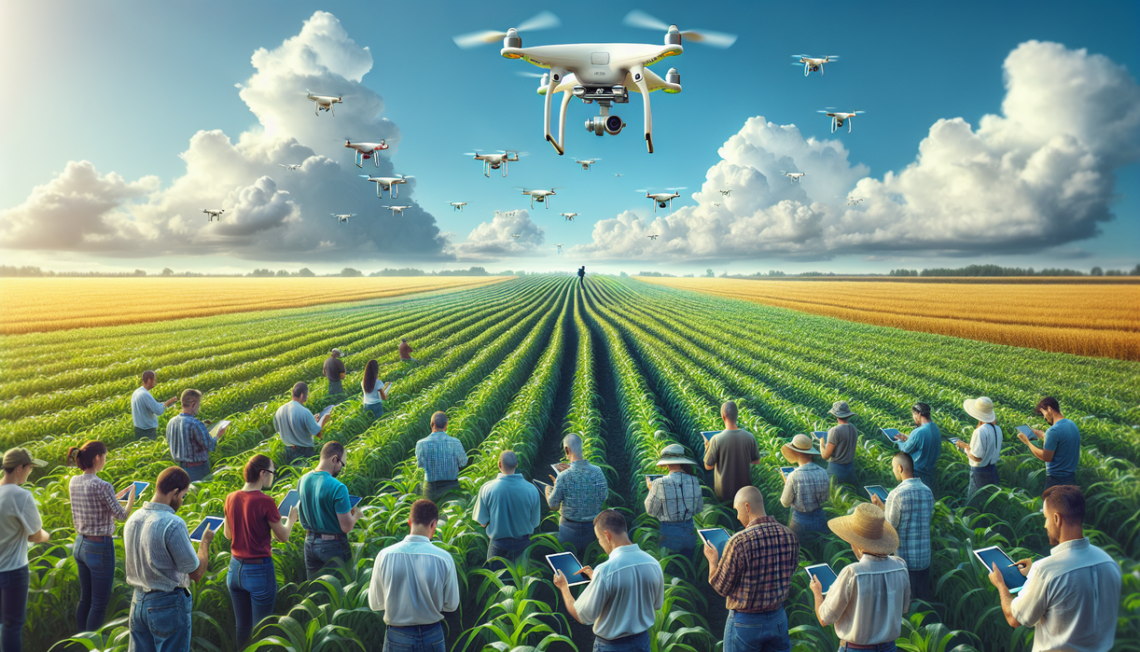
The real breakthrough arrives outside, over actual fields. Participants launch drones, adjust camera angles, practice manual flight, and run automated missions. As images stream in, instructors help everyone interpret what they see. Yellow streaks in corn? Maybe nitrogen loss. Patches of stunted soybeans? Possibly compaction or drowned-out zones. By tying observations to agronomic context, producers start to think like aerial analysts, not just pilots.
Turning Drone Data Into Decisions
Collecting high-resolution imagery means little without context-driven analysis. Extension-style programs teach producers how to convert raw images into management layers: variable-rate prescriptions, targeted scouting routes, or yield risk alerts. Participants experiment with basic mapping tools, then discuss how each map fits their decision calendar. My view: the strongest training focuses less on fancy software tricks, more on embedding drone insights into weekly routines. When a farmer can say, “This map tells me where to walk first tomorrow,” context has fully connected technology to practical action.