 0
0
 0
0
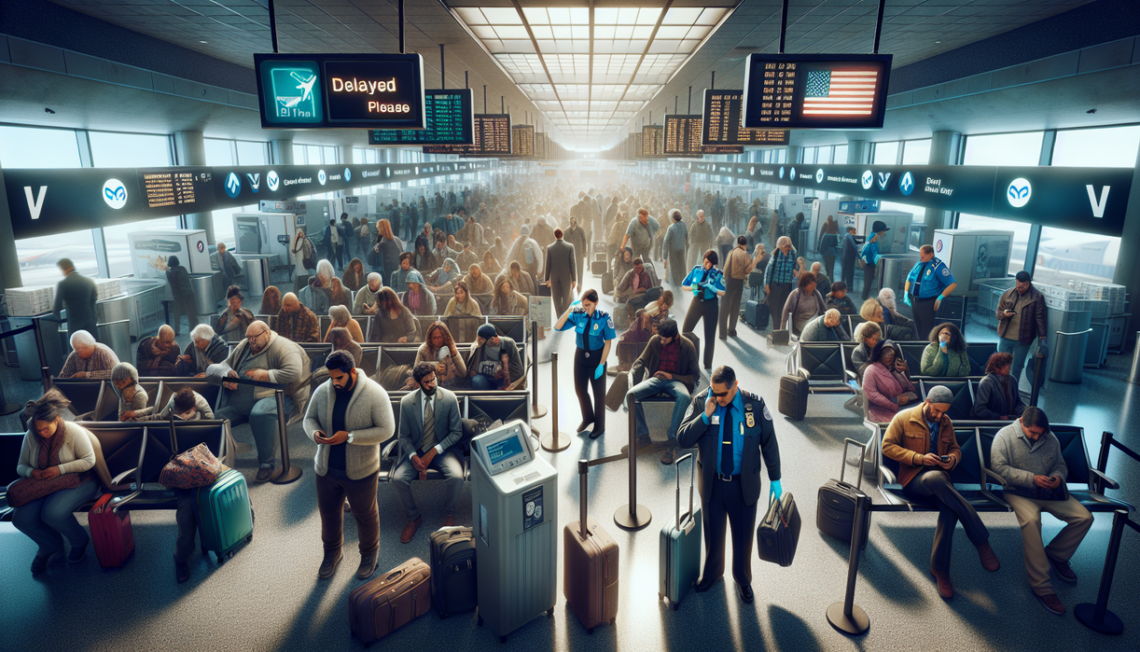
www.silkfaw.com – The government shutdown is no longer just a political standoff in distant offices; it is now reaching travelers in the most tangible way possible: hours-long airport security lines. As federal paychecks stall, some Transportation Security Administration (TSA) officers call in sick or seek temporary work elsewhere, leaving checkpoints understaffed and overwhelmed. For passengers, that shortage converts into 3, 4, even 5 hour waits before they even glimpse the departure gate.
What once felt like a routine inconvenience now borders on crisis management. Airlines advise passengers to show up half a day early. Families with kids stack snacks and phone chargers in carry-ons, preparing to camp in winding queues. The government shutdown, once a headline, is now an exhausting lived experience for anyone who needs to fly.
How the Government Shutdown Stalls the Security Line
The connection between the government shutdown and airport chaos begins with basic math. Much of the security workforce consists of federal employees who receive delayed or uncertain pay. Many still show up out of duty or fear of losing their roles. Others cannot afford unpaid labor, especially with rising costs at home. Each missing officer leaves one lane closed, which pushes more passengers toward fewer open stations.
Airports already operate near capacity during busy seasons. Insert a staffing shortfall, and pressure builds quickly. A single absentee shift might turn a 30 minute line into a 90 minute one. Multiply that by multiple checkpoints throughout peak travel hours, and you start seeing four or five hour waits. The government shutdown becomes visible not just as an abstract funding gap, but as a human bottleneck between the curb and the gate.
Security protocols also do not magically simplify because of political arguments. Luggage still needs screening. IDs still require verification. Officers still must resolve suspicious items or alarms. Since regulations stay strict while staffing thins, the entire system slows. It is like asking a marathon runner to finish at the same pace while removing support stations along the route. Eventually, performance drops, frustration grows, and risk creeps upward.
What Travelers Are Experiencing on the Ground
For travelers, the government shutdown translates into a new ritual of uncertainty. People arrive at terminals well before dawn for late-morning flights, simply to avoid missing boarding. Social media fills with photos of lines curling around ticketing halls. Some passengers report missing flights despite arriving hours early, stuck behind hundreds of stressed, anxious faces. The airport, once a predictable pipeline, turns into a lottery of timing and patience.
Parents tell stories of children melting down in queues that barely inch forward. Elderly passengers struggle to stand for long stretches, with limited seating near the checkpoints. Business travelers lose critical meetings or connections. These are not theoretical costs of political brinkmanship; they are lost wages, missed milestones, and shattered plans. The government shutdown seeps into birthdays, funerals, job interviews, and long-awaited vacations.
Airports and airlines attempt damage control, but their tools are limited. Announcements urge passengers to arrive earlier, though not everyone can adjust schedules easily. Some hubs redeploy staff to manage crowds or keep tempers from boiling over. Still, the core issue persists: fewer TSA officers, more passengers, identical security rules. The arithmetic does not work, no matter how many signs point toward the nearest checkpoint.
Why This Crisis Should Change How We Think About Public Service
Beyond immediate aggravation, the government shutdown’s impact on airport security exposes a deeper misconception about public service. Many people assume federal workers are faceless figures in distant buildings, insulated from ordinary life. Yet these same workers scan our bags, guide aircraft from towers, inspect food, and maintain safety systems we barely notice. When funding stops, we see just how interwoven their labor is with our daily routines. From my perspective, this moment demands more than temporary outrage; it calls for a reassessment of how we value stability, reliability, and shared infrastructure. Airports are only one visible fault line. If we continue treating public services as bargaining chips, we should expect future disruptions to arrive not just at the terminal door, but across hospitals, schools, and emergency response networks. The lines at security, winding in exhausted loops, are really a mirror showing how fragile comfort becomes when basic governance falters.