 0
0
 0
0
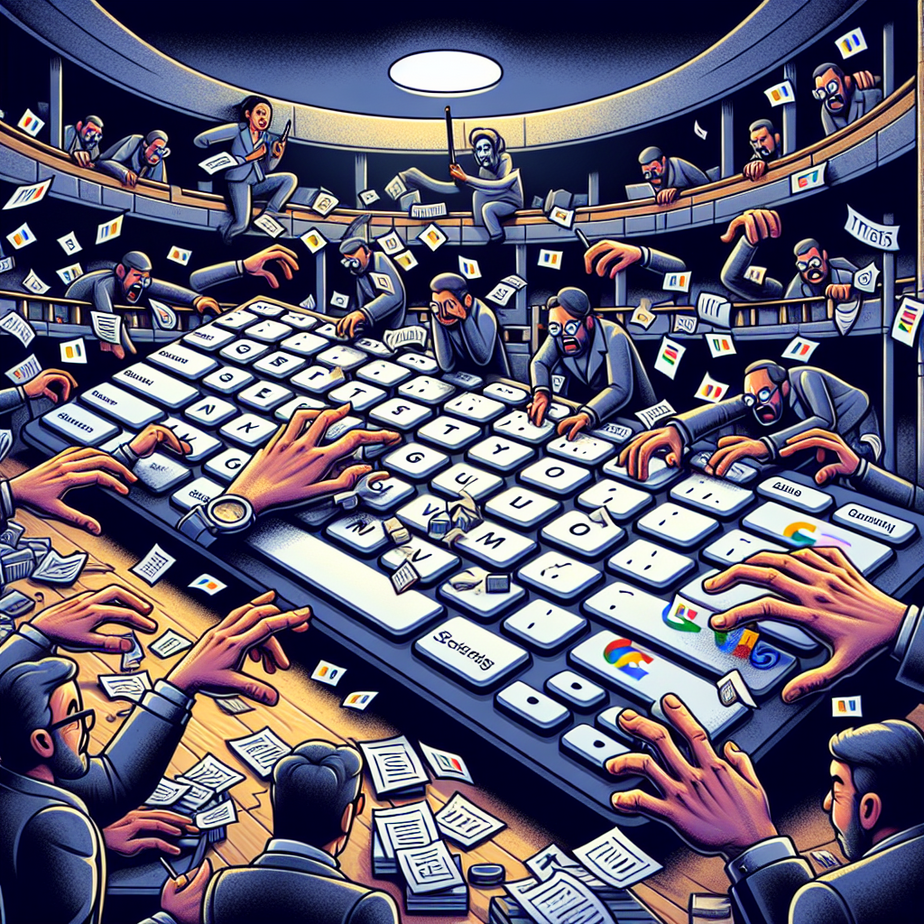
www.silkfaw.com – In a world where typing precision is essential, especially when drafting important messages or official emails, Google’s Gboard seems to be causing more chaos than convenience. This once-reliable typing tool is under fire for its headline-making autocorrect slip-ups. Users are expressing frustration over an increasingly familiar scenario: attempting to type ‘shrimp’ only for Gboard to morph it into ‘shaming.’ Such blunders are not just embarrassing but can have far-reaching consequences for professionals who rely heavily on text communication.
With an ever-growing number of irritated Gboard users taking to platforms like Reddit to share their grievances, it’s no wonder many are considering alternatives. Autocorrect has always been a double-edged sword, but Google’s solution seems overly keen on wielding it much to user’s dismay. While Gboard recently introduced a tap-to-undo feature to address some of its predictive text issues, the updates have not been enough to quell the community’s discontent.
The backlash primarily stems from Gboard’s overzealous AI, often missing the mark on context and providing surprising suggestions that leave users perplexed. The lack of customization in ensuring these AI predictions align more accurately with individual typing habits has prompted many to seek refuge in competitors like SwiftKey. This demand for more control and understanding beyond the algorithm shows a shift in user expectations for smart technology.
User patience with technology’s quirks is wearing thin, especially when other apps offer streamlined alternatives. SwiftKey, with its more personalized and adaptive AI, has become a haven for those frustrated by Gboard’s missteps. Its capacity to learn and predict with greater accuracy demonstrates the importance of context in autocorrect applications, and its growing popularity underscores a larger issue: people want technology that adapts to them, not the other way around.
Adapting to user needs by refining AI-driven features is not about eliminating errors entirely—an improbable feat but about minimizing them drastically. The exodus from Gboard illustrates a profound need for technology that can intuitively grasp the nuances of human communication. As technology becomes smarter, users are demanding tools that don’t just transcribe but comprehend the intricacies of personal communication styles.
The Battle of AI: Context is Key
Understanding the context behind typed words is at the heart of effective autocorrect functions. Gboard’s current strategy seems fixated on surface-level language learning, missing the depth that users crave for a seamless experience. Google’s challenges highlight the difficulty of developing a one-size-fits-all tool within the vast diversity of global users’ typing habits and dialects.
SwiftKey capitalizes on Gboard’s shortcomings by offering more than just basic text predictions. It promises an autocorrect system that learns from the user’s frequent word choices and preferences, embedding context into its algorithms. It’s this attention to individual variations that could mark the difference between a useful tool and an infuriating one, illustrating the potential for AI to cater to personal usability rather than mere technical prowess.
A Need for Customization and Control
Beyond AI proficiency, users are crying out for enhanced customization. Many tech-savvy individuals desire the freedom to tailor their typing tools to match their specific needs, which the rigid architecture of current Gboard offerings often fails to support. Offering a wider range of personalization options could not only win back disillusioned users but also foster a loyal base that prefers a personalized typing interface.
As innovation progresses, the ability to toggle features, set personal specifics, and influence predictive behavior will likely drive user satisfaction. The path forward for companies like Google is clear: listen to the consumers calling for a highly customizable experience that respects the intricate ways humans communicate. Technology firms that embrace this demand are sure to capture not just attention but earnest appreciation from their user base.
In conclusion, the key takeaway from Gboard’s trials is not just about rectifying autocorrect errors, but about rethinking how technology interacts with the personal facets of language use. In the age of AI, expecting technology to not only predict but truly understand and serve the user’s needs is a reasonable demand. The digital tools that emerge successful will be those that bridge the gap between functionality and the subtle art of human communication.